tongda-logo
NPK-fertilizer-production-line

NPK Fertilizer Production Line

Diverse Types of NPK Fertilizer Production Line

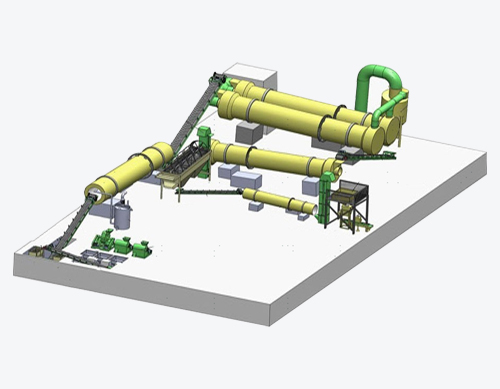
NPK fertilizer production line refers to the equipment and process equipment specially used for the production and processing of NPK compound fertilizers. NPK fertilizer is a comprehensive fertilizer that contains three main nutrients: Nitrogen (N), Phosphorus (P) and Potassium (K). These nutrients are very important for the growth and development of plants, so NPK fertilizers are widely used in agriculture. The design and process flow of NPK fertilizer production line can be adjusted according to different scales and needs. The use of these production lines enables efficient production, improves consistency of fertilizer quality, reduces production costs, and meets the nutritional needs of different crops and soil conditions.

NPK-fertilizer-production-line

Annual output: 30,000 tons

NPK-fertilizer-production-line

Annual output: 100,000 tons

For Pricing and Further Details

NPK Fertilizer Production Line: A Comprehensive Guide

Working Video

The design and process flow of NPK fertilizer production line can be adjusted according to different scales and needs. The use of these production lines enables efficient production, improves consistency of fertilizer quality, reduces production costs, and meets the nutritional needs of different crops and soil conditions.

Applications

  1. Nitrogen Sources:

    • Ammonium Nitrate
    • Urea
    • Ammonium Sulfate
  2. Phosphorus Sources:

    • Ammonium Phosphate (Monoammonium Phosphate, Diammonium Phosphate)
    • Rock Phosphate
  3. Potassium Sources:

    • Potassium Chloride
    • Potassium Sulfate
  4. Micronutrient Sources 

  5. Filler Materials 

  6. Binders and Coating Agents 

Compound-fertilizer-raw-materials

Working Process

Compound-fertilizer-production-line
Raw material ingredients

urea, ammonium nitrate, ammonium chloride, ammonium sulfate, ammonium phosphate (monoammonium phosphate, diammonium phosphate, heavy calcium, general calcium), potassium chloride (potassium sulfate) and other raw materials are prepared in a certain proportion.

Stirring of raw materials

Stir the prepared raw materials evenly to increase the uniform fertilizer content of the fertilizer granules as a whole.

Raw material granulation

Send the uniformly stirred raw material into the granulator for granulation (drum granulator or extrusion granulator can be used).

Granules drying

Send the granules made by the granulator to the dryer, and dry the moisture contained in the granules to increase the strength of the granules and facilitate storage.

Granule cooling

The temperature of the dried fertilizer granules is too high and easy to agglomerate. After cooling, it is convenient to store in bags and transport.

Particle classification

The cooled particles are classified, the unqualified particles are crushed and re-granulated, and the qualified products are screened out.

Finished film

Coating the qualified products to increase the brightness and roundness of the particles.

Finished product packaging

Pack the film-coated particles, that is, the finished product, into bags and store them in a ventilated place.

NPK Fertilizer Production Line Main Machine

  1. Crusher: This machine is used to break down and finely grind raw materials into smaller particles, facilitating the subsequent mixing and blending process.

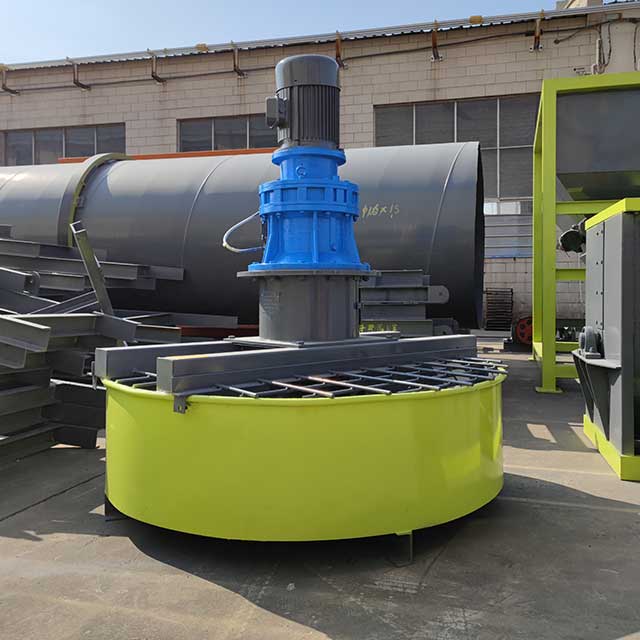
  2. Mixer: The mixer is used to blend the different raw materials, including nitrogen, phosphorus, potassium sources, and any additional additives or supplements. It ensures uniform distribution of nutrients throughout the mixture.

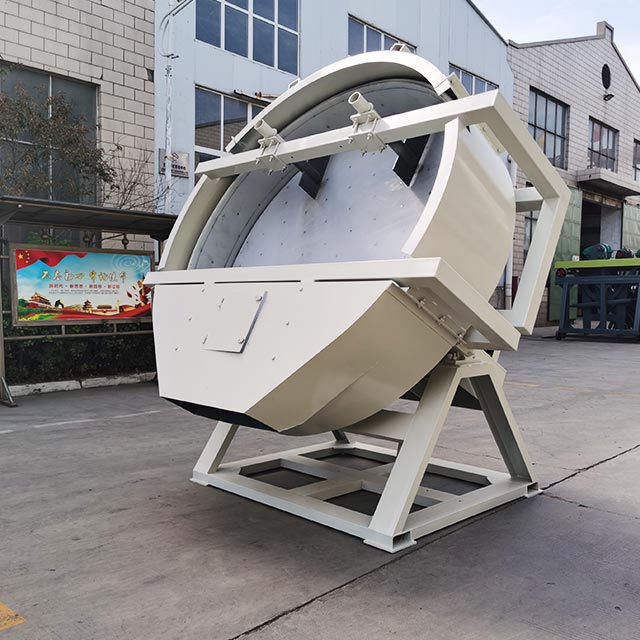
  3. Granulator: The granulator is a key machine in the production line that converts the blended material into granules. It uses a combination of compression, shaping, and extrusion processes to form the granules of the desired size.

  4. Dryer: After granulation, the fertilizer granules may contain excess moisture. The dryer is used to reduce the moisture content to a suitable level, enhancing the stability and shelf life of the final product.

  5. Cooler: The cooler is used to lower the temperature of the dried granules. This step helps prevent moisture absorption and clumping during storage and transportation.

  6. Screening Machine: The screening machine is used to separate the granules based on their size. It ensures that the final product meets the desired granule size requirements.

  7. Coating Machine: In some cases, a coating machine is used to add a protective or functional coating to the fertilizer granules. This coating can improve nutrient release characteristics, reduce dust formation, or enhance granule appearance.

  8. Packaging Machine: The packaging machine is used to weigh, fill, and seal the final product into bags or other appropriate containers. It enables efficient packaging and labeling of the NPK fertilizer for distribution and sale.

ItemModelFunction
Horizontal mixerTDWJ-9015Blends materials evenly
Vertical CrusherTDLTF-600Crushes raw materials efficiently
Pan GranulatorTDYZ-1500Shapes granules uniformly
Double Roller GranulatorTDJZ-2TCompacts and granulates materials
Rotary Drum Drying MachineTDHG-0808Dries materials effectively
Rotary Drum Cooling MachineTDLQ-1010Cools granules uniformly
Rotary Screening MachineTDGS-1030Screens particles efficiently
Fertilizer Packaging Machine Packages products accurately

Advantages

Superior Ball Forming Rate

Achieves over 90-95% success in forming spherical particles, maintaining high-quality output.

Quality Standards

Maintains stringent quality control measures for moisture content, particle size, and organic material composition.

Diverse Raw Material Applicability

Efficiently handles various organic waste materials, ensuring versatility in production.

Streamlined Process

Eliminates pre-treatments, reducing processing time and operational costs significantly.

Fertilizer Machinery News

Reliable Equipment Performance

Ensuring consistent and efficient fertilizer production for maximum yield.

Timely Maintenance & Repairs

Minimizing downtime with prompt servicing to keep operations running smoothly.

Expert Technical Support

Access to assistance for troubleshooting and optimizing equipment performance.

Give us a call or
Simply Complete the Form