tongda-logo
Compound-fertilizer-production-line

Compound Fertilizer Production Line

Diverse Types of Compound Fertilizer Production Line

A compound fertilizer production line is an integrated process that involves the preparation, mixing, granulation, drying, cooling, screening, coating (optional), and packaging of various raw materials to create balanced compound fertilizers containing essential nutrients such as nitrogen, phosphorus, and potassium (NPK). This production line ensures precise nutrient ratios, optimal particle size distribution, and enhanced handling properties.

Compound-fertilizer-production-line

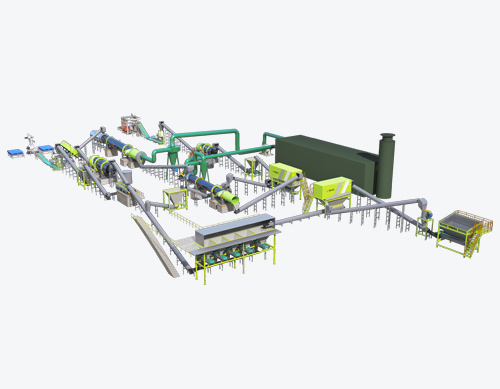
Annual output of 100,000 tons

Compound-fertilizer-production-line

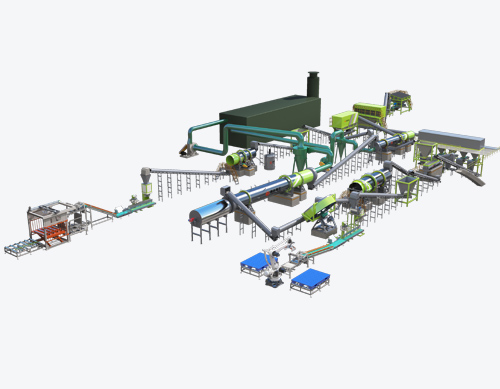
Annual output of 200,000 tons

For Pricing and Further Details

Compound Fertilizer Production Line: A Comprehensive Guide

Working Video

Compound fertilizers refer to chemical fertilizers containing two or more nutrient elements. Compound fertilizers have the advantages of high nutrient content, few side components and good physical properties. According to the crop fertilizer demand pattern, soil fertilizer supply performance and fertilizer effect, on the basis of rational application of organic fertilizers, the application quantity, fertilization period and application method of nitrogen, phosphorus, potassium and medium and trace elements are proposed.

Applications

  • Major nutrients such as nitrogen, phosphorus, and potassium: such as urea, phosphate, ammonium nitrate, etc.;
  • Auxiliary nutrients and trace elements: such as potassium sulfate, magnesium sulfate, boric acid, etc.;
  • Organic raw materials: such as animal manure (poultry manure), plant straw, algae and other organic waste;
  • Other additives: such as biological agents, chelating agents, etc.
Compound-fertilizer-raw-materials

Working Process

Compound-fertilizer-production-line
Raw material ingredients

urea, ammonium nitrate, ammonium chloride, ammonium sulfate, ammonium phosphate (monoammonium phosphate, diammonium phosphate, heavy calcium, general calcium), potassium chloride (potassium sulfate) and other raw materials are prepared in a certain proportion (according to Market demand and soil test results in various places).

Stirring of raw materials

Stir the prepared raw materials evenly to increase the uniform fertilizer content of the fertilizer granules as a whole.

Raw material granulation

Send the uniformly stirred raw material into the granulator for granulation (drum granulator or extrusion granulator can be used).

Granules drying

Send the granules made by the granulator to the dryer, and dry the moisture contained in the granules to increase the strength of the granules and facilitate storage.

Granule cooling

The temperature of the dried fertilizer granules is too high, and it is easy to agglomerate. After cooling, it is convenient to store in bags and transport.

Particle classification

The cooled particles are classified, the unqualified particles are crushed and re-granulated, and the qualified products are screened out.

Finished film

Coating the qualified products to increase the brightness and roundness of the particles.

Finished product packaging

Pack the film-coated particles, that is, the finished product, into bags and store them in a ventilated place.

Compound Fertilizer Production Line Main Machine

  • Batching System: This system measures and prepares the raw materials in proper proportions before feeding them into the production process.
  • Crushing Machine: Raw materials may need to be crushed into smaller particles to ensure uniform mixing and granulation.
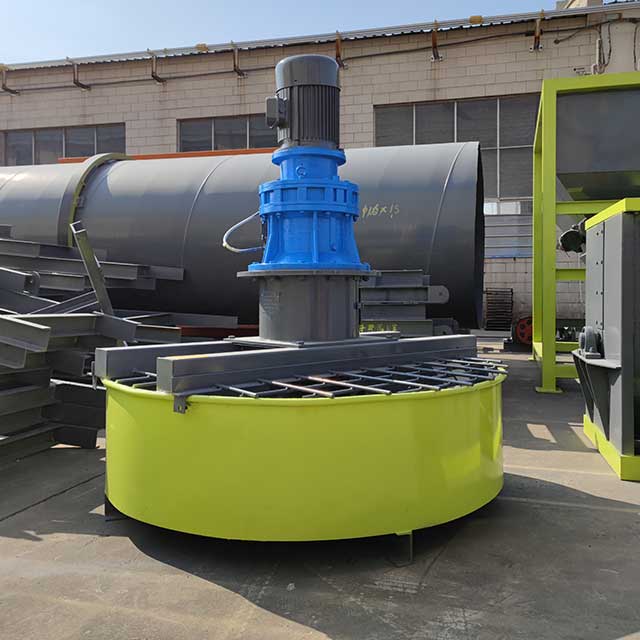
  • Mixing Machine: The equipment blends the various raw materials together to create a homogenous mixture for granulation.
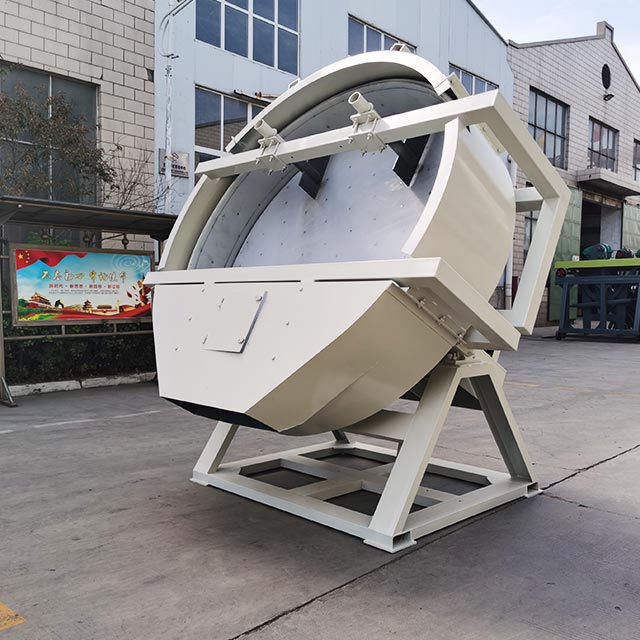
  • Granulation Machine: This granulator forms the mixed material into granules. Common types include rotary drum granulators, disc granulators, and compaction granulators.
  • Drying System: After granulation, the moisture content of the granules is reduced using dryers, ensuring stability and preventing caking.
  • Cooling Equipment: The cooled granules are more durable and easier to handle. Cooling also helps in preventing the release of ammonia gas.
  • Screening Machine: The granules are screened to separate those of the desired size for the final product.
  • Coating Machine: In some cases, a coating may be applied to the granules to improve their appearance, control nutrient release, or add specific functionalities.
  • Packing Machine: The finished granules are weighed, packaged, and sealed for distribution.
ItemModelFunction
Dynamic Batching SystemTDDP-3Raw material measurement and preparation
Single Shaft Continuous Mixer Homogeneous material blending
Pan GranulatorTDYZ-800Material granulation process
Rotary Drum Drying MachineTDHG-0808Granule moisture reduction
Rotary Drum Cooling MachineTDLQ-1010Granule temperature reduction
Rotary Screening MachineTDGS-1030Granule size separation
Granule Packing Scale with BucketTDFJ-4CPrecise granule packaging
Forklift Feeding MachineTDCW-2030Material transportation and feeding
Induced FanTDFJ-4CAir circulation and ventilation
Cyclone Dust CollectorTDXF-900Airborne particle separation
Hot Blast FurnaceSelf build, we provide drawingsHigh-temperature air generation
Dust ChamberSelf build, we provide drawingsDust containment area
Electric Control Cabinet Equipment operation control and monitoring
 

Advantages

Advanced Technology

Compact layout and energy-saving design.

High Granulation Rate

Ensures efficient product output.

Versatile Application

Suitable for various raw materials and granulation needs.

Diverse Fertilizer Production

Producing various types and concentrations of fertilizers.

Fertilizer Machinery News

Reliable Equipment Performance

Ensuring consistent and efficient fertilizer production for maximum yield.

Timely Maintenance & Repairs

Minimizing downtime with prompt servicing to keep operations running smoothly.

Expert Technical Support

Access to assistance for troubleshooting and optimizing equipment performance.

Give us a call or
Simply Complete the Form